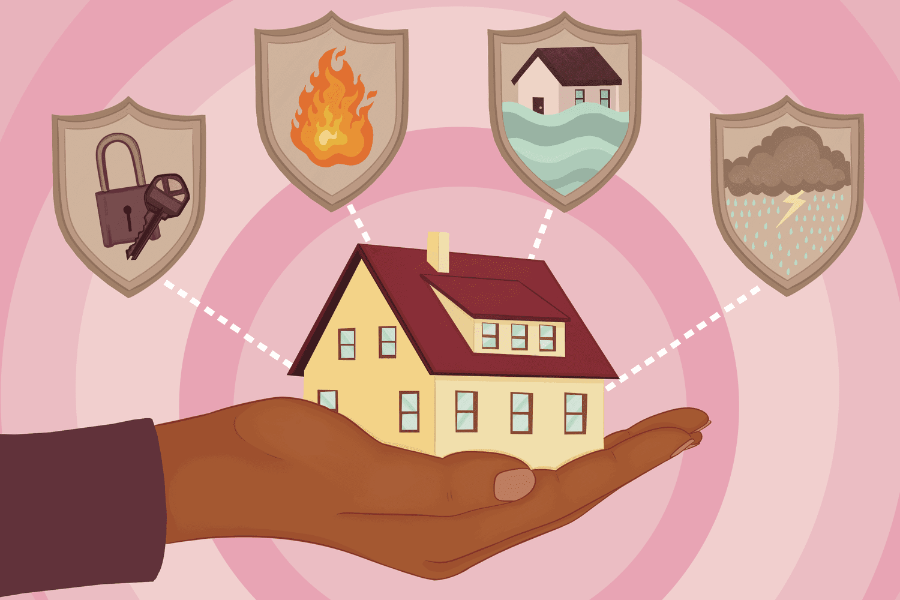
Hazard insurance for home is a term many homeowners hear when buying a house or working with a lender. It can sound like a separate policy. But in most cases, it means the dwelling coverage part of a homeowners insurance policy.
A lender may ask for hazard insurance for home because the house is the collateral for the mortgage. The lender wants to know the physical structure is protected from covered risks like fire, wind, hail, and other damage. Progressive explains that hazard insurance is often used by lenders to describe dwelling coverage under a homeowners policy.
Hazard Insurance Policy For Home

A Hazard Insurance Policy For Home usually protects the main structure of your house from covered events. These may include fire, lightning, wind, hail, smoke, and some types of accidental damage. The exact coverage depends on the policy.
When people say hazard insurance for home they often mean the part of the policy that repairs or rebuilds the dwelling. This is different from personal property coverage. It is also different from liability coverage.
A standard homeowner’s policy may include several parts. It may cover the house belongings’ liability and extra living costs. But hazard insurance for home usually focuses on the physical home itself.
Homeowners should read the declarations page carefully. This page shows coverage limits deductibles and key policy details. A Hazard Insurance Policy For Home should match the cost to rebuild the home not only the market price.
Hazard Insurance For SBA Loan

Hazard Insurance For SBA Loan is important for business owners who use property as collateral. SBA rules can require hazard insurance on collateral for certain 7(a) and 504 loans. The federal regulation says SBA requires hazard insurance for 7(a) loans greater than $500,000 and 504 projects greater than $500,000 on all collateral.
However SBA guidance and lender requirements may change by program and time. Some current industry summaries say hazard insurance requirements may apply to lower loan thresholds in certain SBA programs. So borrowers should always confirm the rule with the lender and SBA documentation.
This matters because hazard insurance for home and business hazard insurance may not be the same. A home policy protects a residence. SBA loan insurance may involve business property equipment inventory or commercial real estate.
If a borrower pledges a home or building as collateral the lender may ask for proof of coverage. The policy must usually show enough insurance to protect the collateral. Hazard Insurance For SBA Loan can delay closing if documents are missing.
What Is Hazard Insurance Policy
What Is Hazard Insurance Policy is a common question for new buyers. In simple words it is coverage that protects the home structure from covered hazards. It is often not a separate policy. It is usually part of homeowners insurance.
Hazard insurance for home may be required by a mortgage lender before closing. This does not mean the lender wants a special product. In many cases the lender simply wants proof that your homeowners policy includes dwelling coverage.

USAA also states that hazard insurance is part of homeowners insurance and is the same as dwelling coverage rather than a separate policy. This is why homeowners should avoid paying for duplicate coverage by mistake.
A good way to understand What Is Hazard Insurance Policy is to ask what part of the home it protects. It usually protects walls, roof, foundation, attached garage, and built in systems. It does not always cover floods, earthquakes, or normal wear.
How To Get Hazard Insurance
How To Get Hazard Insurance starts with getting a homeowners insurance quote. You can contact an insurance agency, direct insurer, or online quote site. You will need your home address, year built, roof age, square footage, and safety details.
To buy hazard insurance for home, compare several quotes. Look at coverage limits, deductibles, exclusions, and claim service. Do not choose only the lowest price. A cheap policy can become costly if it leaves gaps.
Ask the insurer whether the dwelling limit reflects the current rebuilding cost. Construction prices can change. If the limit is too low you may not have enough money after a major loss.
After choosing a policy ask for proof of insurance. Your lender may call it an insurance binder or evidence of insurance. This document helps prove your hazard insurance for home is active before the mortgage closes.
What Hazard Insurance Usually Covers
hazard insurance for home usually covers sudden and accidental damage to the dwelling from named or open perils listed in the policy. Common covered events may include fire, lightning, wind, hail, vandalism, smoke, and falling objects.
Coverage can vary by policy type. Some policies cover more risks than others. That is why reading the policy is important. The same price does not always mean the same protection.
A homeowner’s policy may also include separate coverage for personal belongings and liability. But when a lender asks for hazard insurance for home the main focus is usually the dwelling coverage that protects the structure.
Read more: House Of Insurance Agency, How To Find Better Coverage With 6 Smart Moves
Some areas need special attention. If you live in a storm flood, wildfire, or earthquake risk area, your regular policy may have limits. You may need extra coverage or a separate policy.
What Hazard Insurance May Not Cover
hazard insurance for home does not cover everything. Flood damage is usually excluded from standard homeowners insurance. Earthquake damage may also need a separate policy or endorsement.
Normal wear and tear is not covered. Damage from neglect, poor maintenance, insects, mold, or gradual leaks may also be excluded. Insurance is usually designed for sudden covered losses, not long-term home problems.
This is why homeowners should not assume every disaster is covered. Ask your insurer direct questions. Does the policy cover wind? Does it cover roof damage? Does it cover sewer backup? Does it cover water damage from plumbing?
A strong hazard insurance for home plan includes understanding exclusions. The best time to find gaps is before a claim. Not after damage happens.
Final Thoughts
Hazard insurance for home is not as confusing as it sounds. In most cases it means the dwelling coverage inside your homeowners insurance policy. It protects the physical structure of the home from covered risks.
Homeowners should understand what is covered, what is excluded, and how much protection they need. A lender may require proof before a mortgage closes. SBA borrowers may also face hazard insurance rules when property is pledged as collateral.
The best way to handle hazard insurance for home is to compare quotes, read the details, and ask clear questions. Good coverage can protect your house, your loan, and your financial future.
FAQs About Hazard Insurance For Home
Q1. What is hazard insurance for home?
hazard insurance for home usually means the dwelling coverage part of a homeowners insurance policy. It protects the physical structure from covered hazards.
Q2. Is hazard insurance for home separate from homeowners insurance?
Usually no. hazard insurance for home is commonly part of homeowners insurance. Lenders often use the term when they mean dwelling coverage.
Q3. Why does my lender require hazard insurance for home?
Your lender requires it because the home is collateral for the mortgage. The lender wants the house protected if a covered event damages it.
Q4. Does hazard insurance for home cover floods?
Usually no. Standard homeowners insurance often excludes flood damage. You may need a separate flood insurance policy.
Q5. How much hazard insurance for home do I need?
You usually need enough to rebuild the home after a major covered loss. This amount should reflect construction costs not just the home sale price.
Q6. Is hazard insurance needed for an SBA loan?
It may be needed when property is pledged as collateral. SBA hazard insurance rules can depend on the loan type loan amount and lender requirements.
